
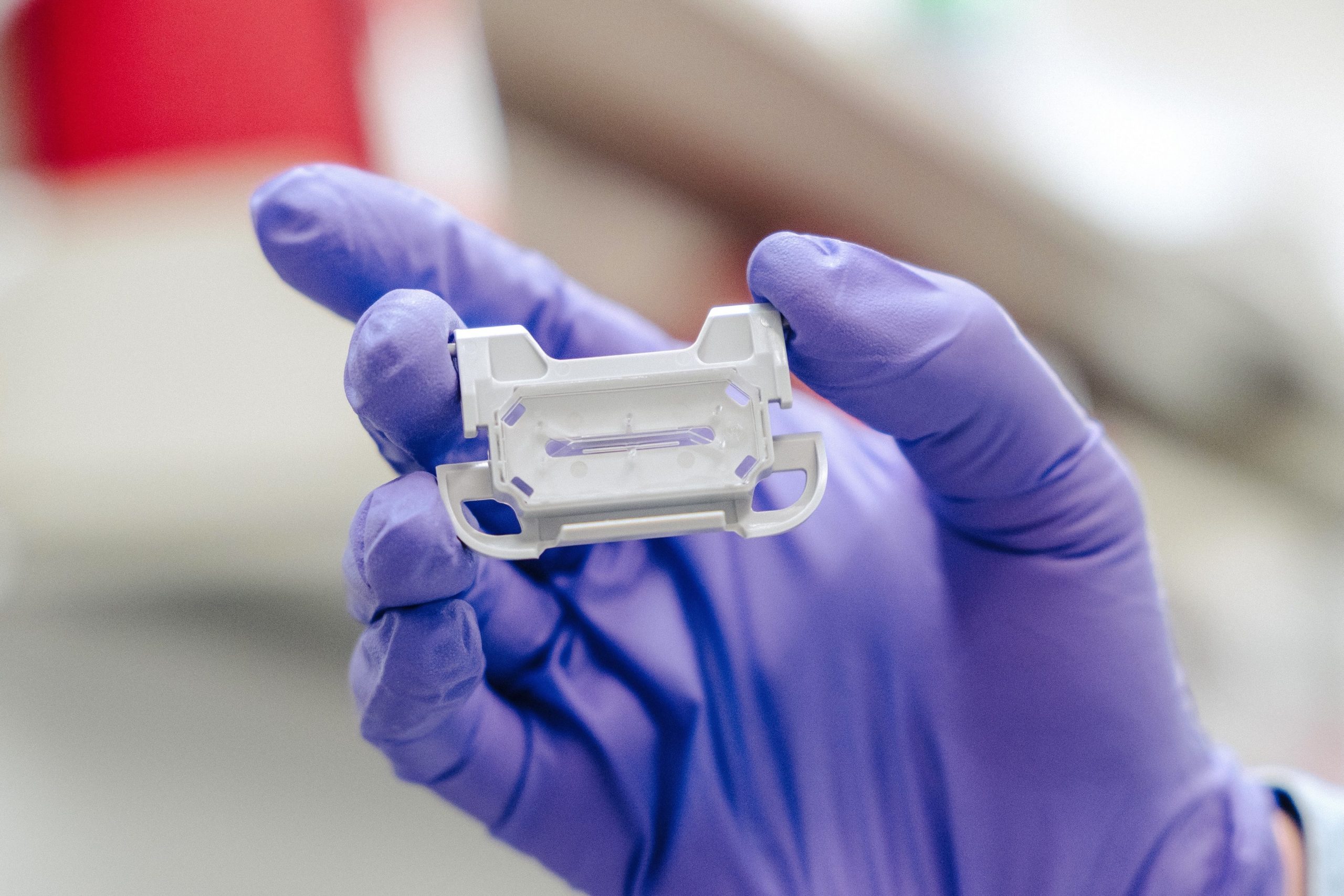
Inside a lab at the University of Tennessee Health Science Center, a transparent chip no bigger than a stick of gum could be changing the way scientists study the human brain and how they fight some of the world’s most dangerous viruses.
Colleen Jonsson, PhD, Harriet S. Van Vleet Chair of Excellence in Virology and director of UT Health Science Center’s Regional Biocontainment Laboratory and Institute for the Study of Host Pathogen Systems, is leading a project that pushes the boundaries of biomedical research. Together with her graduate student, Walter Reichard, she is using a human brain-on-a-chip to explore how deadly brain infections take hold and how to stop them.
A New Frontier for Non-Animal Research

Venezuelan and Eastern equine encephalitis viruses (VEEV and EEEV) are rare but devastating infections that can cause fatal brain inflammation, particularly in children and older adults. “They infect children and older adults and cause lethal disease,” Dr. Jonsson said simply. “The brain is extremely well protected, and these viruses can still find a way in.”
To understand and combat them, scientists have traditionally relied on mouse models. But Dr. Jonsson’s lab is testing a revolutionary alternative — a miniature, three-dimensional system that replicates the function of the human brain. Known as a brain-on-a-chip, the technology represents what the National Institutes of Health (NIH) and the Food and Drug Administration (FDA) have been calling the future of non-animal research, or “NAMs,” new-approach methods.
“This is novel technology to advance biological and therapeutic discovery,” Dr. Jonsson said. “The human brain chip allows us to do testing in humans. Whereas otherwise, we’re limited to doing our preclinical research with mice.”
How a Brain-on-a-Chip Works
Reichard, who is completing his PhD under Dr. Jonsson, has spent months troubleshooting and optimizing the system to make sure it behaves as similarly to a brain as possible. The device consists of two microscopic channels separated by a porous membrane. “You have these pods on a rack that go into an instrument called a ZOE CM2,” he explained. “That system controls the flow rate of media — basically, the blood — through the chip.”
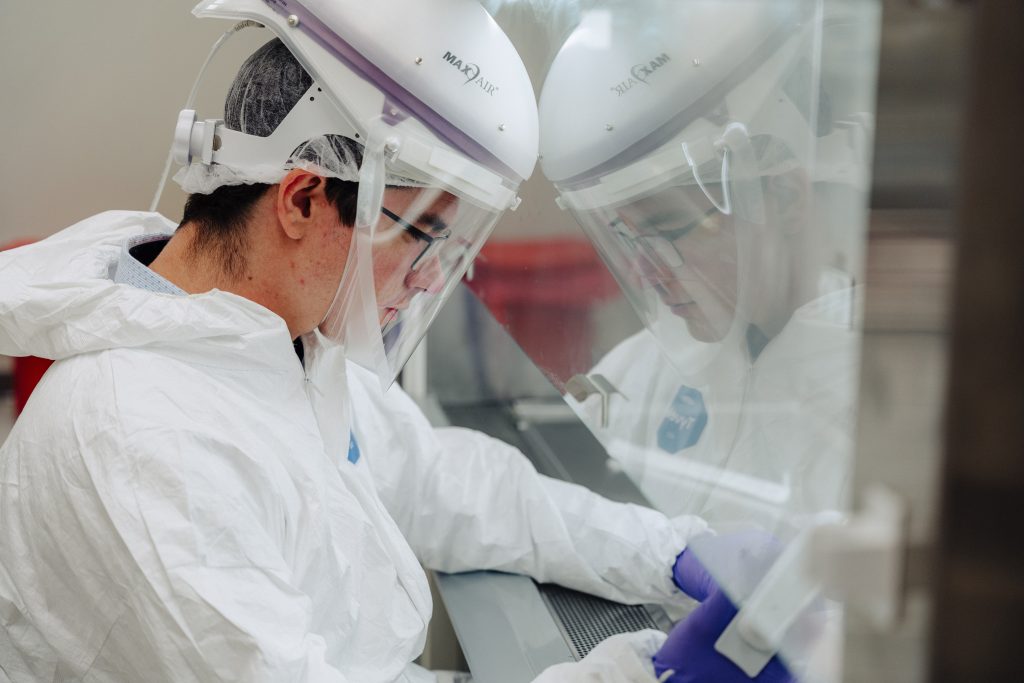
One channel contains human vascular cells, the kind that line blood vessels. The other holds neurons, astrocytes, microglia, and pericytes — key cell types that make up the brain’s structure and immune defenses. Fluid flows continuously through the system, mimicking blood circulation and creating a tight barrier between the two chambers. That barrier, just like the real blood-brain barrier, carefully filters what can and cannot enter the brain.
“The virus we study is able to sneak through this barrier and get into the brain,” Dr. Jonsson said. “The chip recapitulates this tight barrier between our brain and our body. It’s a 3D representation of the brain.”
The human cells used in the model are de-identified and commercially obtained from deceased adult donors. In Dr. Jonsson’s lab, these living tissues form an intricate, dynamic environment that can be infected, treated, and observed under near-realistic conditions.
Exploring a Bridge Between Mouse and Human Research
While the system offers extraordinary promise, Dr. Jonsson is careful not to overstate its capabilities. “We’re at really early stages,” she said. “This is exploratory research to determine the ability of the human brain chip to bridge the gap from mouse to human.”
She doesn’t yet call it superior to animal models, but she believes it could dramatically accelerate translation to human medicine. “I don’t know if we’ll ever get rid of animal models, but having human cells to look at how our drug is working gives us better insight into translation.”
Cost is not the main advantage — Dr. Jonsson admits the technology isn’t cheaper — but the potential precision is. “It gets us right to whether or not the drug could be effective for humans,” she said.
Proof of Promise
Early tests in the Jonsson lab have been promising. The team has already shown that their antiviral drug candidates — developed in collaboration with Bernd Meibohm, PhD, distinguished professor and associate dean for Research in the UT Health Science Center College of Pharmacy, and Jennifer Golden, PhD, associate director of the Medicinal Chemistry Center at the University of Wisconsin — can protect mice from encephalitic virus infection. Now, they are using the brain-on-a-chip to see whether those same drugs inhibit viral replication in human brain tissue.
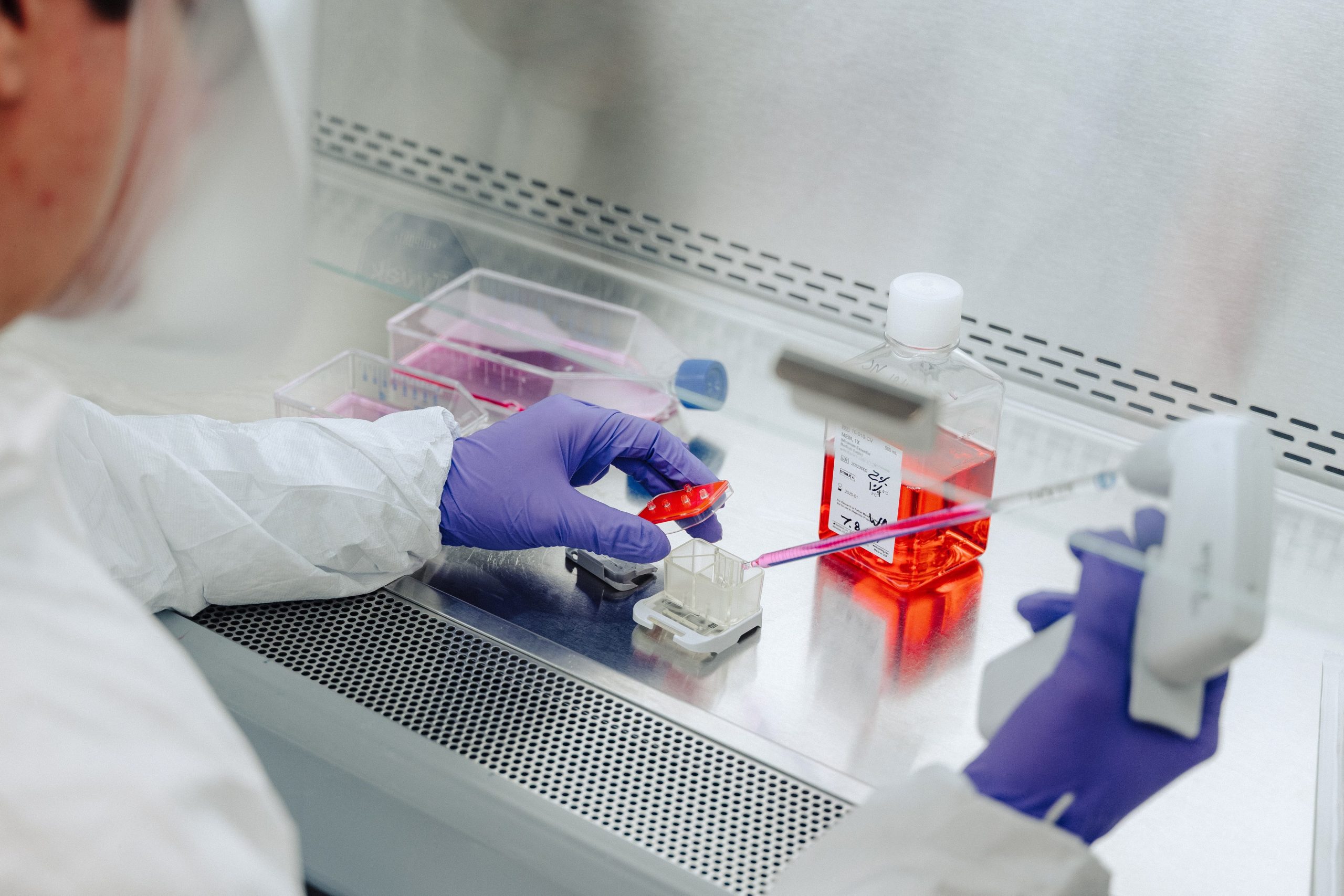
“We can see antiviral efficacy in this chip,” Dr. Jonsson said, referring to a recent proof-of-concept experiment using one compound called Badger 49. “This is a really promising series of antivirals that treat encephalitic infections.”
Reichard finds the system just as thrilling from a research standpoint. “I’d be most excited to see how the virus crosses into the brain channel,” he said. “When we got our first data, we were instantly brainstorming all the things we could do next. There was a lot of excitement when we first started.”
Beyond Brain Infections
The implications extend well beyond viral encephalitis. “This technology could be used for Alzheimer’s drugs, Parkinson’s, even brain cancer,” Dr. Jonsson said. “The system is being used elsewhere in the country for different applications, but when we started, we were a little ahead of the game.”
For Dr. Jonsson, the success of the project comes down to both innovation and mentorship. “You can have all the ideas and dreams,” she said, “but without the right student, it’s not going to go anywhere. Walter has really been the driver behind the project.”
Though Reichard had never worked with organ-on-a-chip systems before, he was willing to take on the challenge. “I had a lot of cell culture experience but not with this technology,” he said. “It’s been a big learning experience.”
Dr. Jonsson smiled. “I’ve always worked with a lot of different technologies,” she said. “I’m usually an early technology embracer.”
The project “Evaluation of Antiviral Efficacy using a Blood Brain Barrier Model” is being funded by the National Institute of Allergy and Infectious Diseases.